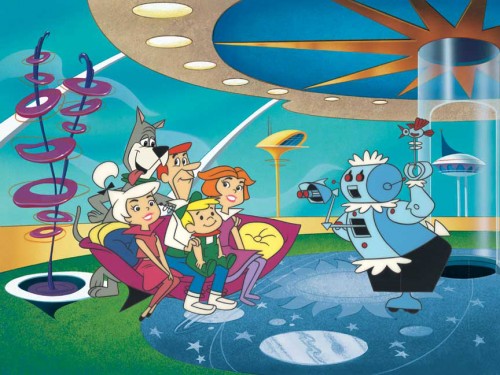
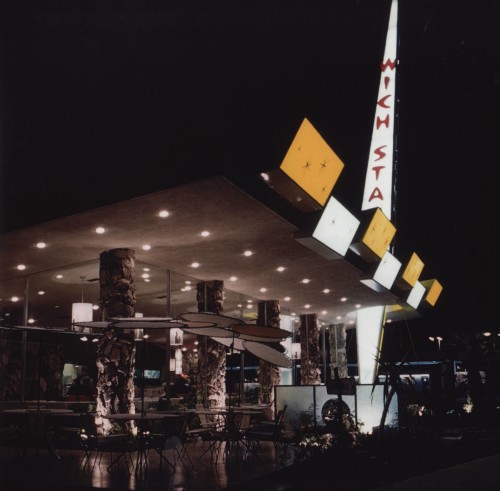
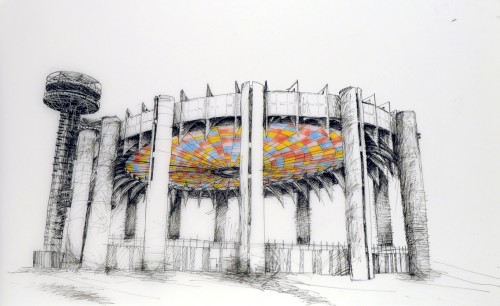
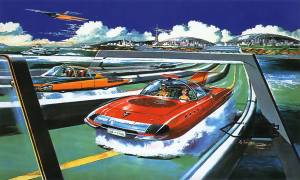
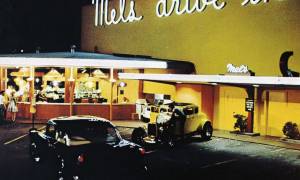
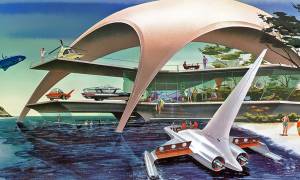
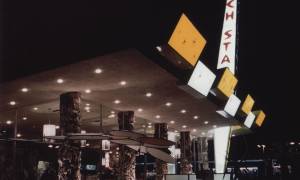
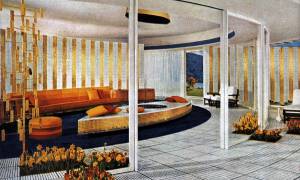
What better epitomizes the visionary futuristic-utopia of the 20th century than the Jetsons? Created in 1962 the prime-time animated sitcom took place in 2062… looking 100 years into the future. Besides the futuristic gadgets and gizmos-surely ahead of their time-the architectural influence is clearly that of Googie design. Including “upswept roofs, curvaceous, geometric shapes, and bold use of glass, steel and neon, Googie was also characterized by space-age designs that depict motion, such as boomerangs, flying saucers, atoms and parabolas, and free-form designs such as ‘soft’ parallelograms and the ubiquitous artist’s-palette motif.” (Source)
Two prominent Googie designs clearly inspired the architectural structure used in the Jetsons series. Saarinen’s TWA terminal and the Seattle Space Needle. Worth noting is that both structures opened in 1962, the same year the Jetsons originally aired. In one of the 24 episodes, “A Date with Jet Screamer”, Judy Jetson is taken on her date with Jet Screamer to The Fun Pad, a space-age amusement park with Ferris Wheels, roller-coasters, and spinning rides. Coincidentally, Astro Land on Coney Island opened in 1962. It’s really quite rare and interesting that these architectural structures and their timelines, being so technically and aesthetically advanced for there time, would be simultaneously depicted in a prime-time animated sitcom—truly visionary.