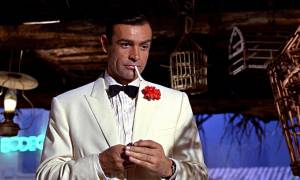
Mad Men’s Bacardi-fueled Fantasies

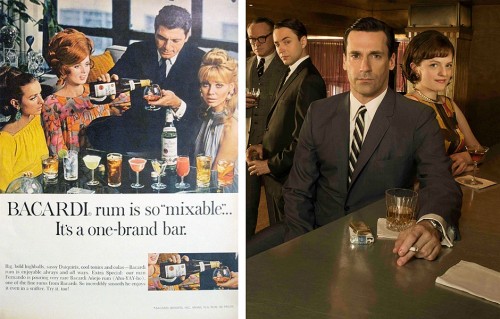
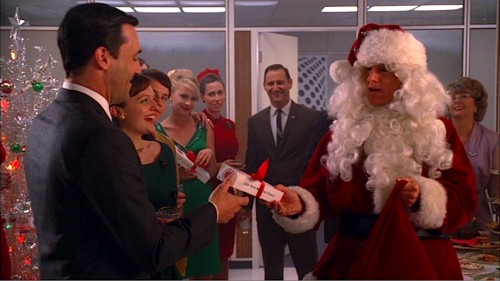
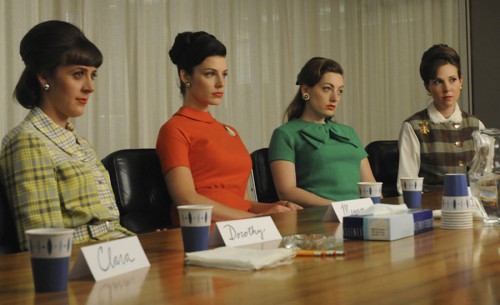
While the rest of the Sterling Cooper staff attends a Kentucky Derby party thrown by Roger Sterling and new wife Jane, Peggy and the other writers are stuck in the office to brainstorm ideas for the Bacardi campaign. Bacardi is looking for five vacation situations for their overall concept “Daiquiri Beach.”

Peggy and the boys sip on Bacardi for inspiration but find none. Copywriter Paul snits, “We’re supposed to sit here and pretend we’re on vacation?” Peggy and Smitty try wordplay with portmanteaus like “Bacardi-licious” and “Bacardi-Eisenhower.” After some deliberation and experimentation with non-alcoholic substances, Peggy begins developing an idea that we often see in today’s beer and cocktail campaigns—the idea that alcohol can whisk us away to some exotic paradise without ever leaving home. Visualizing a hammock set up on a city rooftop, Peggy turns Paul’s negativity into a positive selling point.

Read the full post >

An Audible Smorgasbord of Luxuria Music

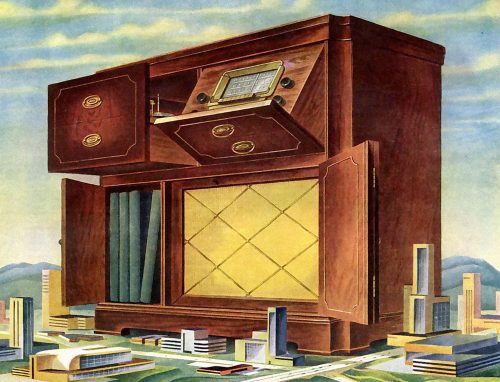
Tired of spinning the same old Esquivel and Les Baxter on the hi-fi? First, make sure you’ve given a listen to the fabulous Ultra Swank compilations curated by our own Chris. Then feast your ears on Luxuriamusic.com. And what a feast it is! Luxuria is an audible smorgasbord of tiki, exotica, and lounge music of our favourite era.

Since its humble beginnings in 2000, Luxuria has been, according to their site, a “meticulously curated mixture of musical genres.” This internet radio station streams an eclectic mix of obscure gems and unexpected twists on beloved standards. In the span of an hour, you can hear Astrud Gilberto’s “The Girl From Ipanema,” the Wally Gator theme song, a little Count Basie, a little Baja Marimba Band, and Mongo Santamaria’s spicy rendition of “In-A-Gadda-Da-Vida.” Wowza!

Read the full post >

Ultra Swank – Your one stop blog for retro living, style and design

Ultra Swank takes you back in time into the kitsch, chic and swank living of the 50s, 60s and the 70s. We mainly focus on the design, architecture and the lifestyle of the happy-go-lucky and space-age-living mentality of that era – but also on the music and movies that takes you back to happier times. Ultra Swank is run by Chris, a Swede born in the wrong decade that currently resides in Barcelona. Read more

Subscribe and follow Ultra Swank

The Match Game

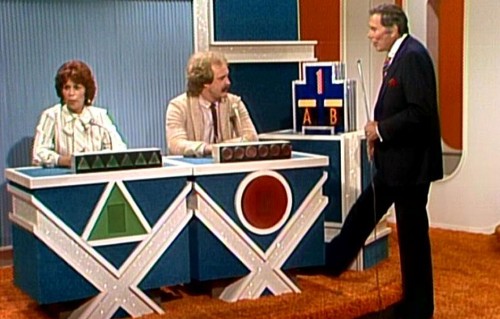
Long before chat shows, judges and “tabloid infotainment” cluttered up American television airwaves, game shows dominated daytime programming. Several popular game shows of the 1950s and ’60s featured celebrity panelists—To Tell the Truth, Password, What’s My Line, You Bet Your Life, I’ve Got a Secret and Hollywood Squares. Each show had a rhythm and structure to it while still allowing for a cheeky faux pas from celebs and contestants. But none bordered on the madcap mania that erupted from The Match Game.

The Match Game is best remembered for its recurring celebrity panelists (Brett Somers, Charles Nelson Reilly, Betty White, and Jack Klugman to name a few) and risqué-sounding questions that encouraged saucy double entendre answers. Take a look at a few clips and you’ll find material that would make today’s censors blush and Marx Brothers-level antics. It ain’t your modern day game show, for sure. And when the series began in 1962, it was quite a different program.
Read the full post >

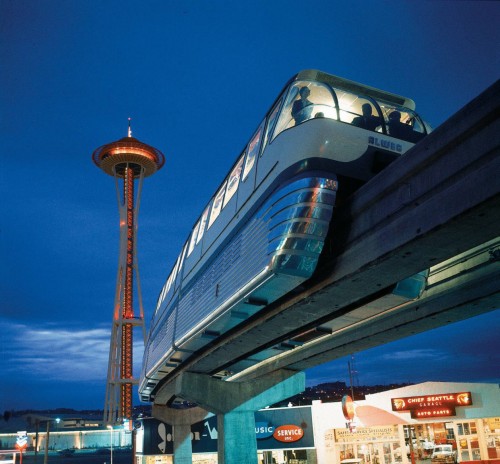
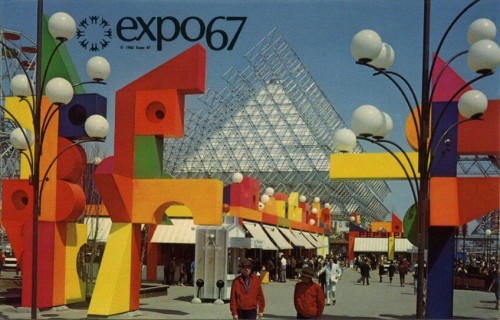
Return to the New York World’s Fair 1964

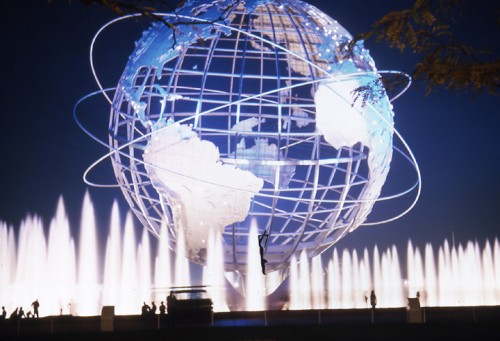
Of the three World’s Fairs set in North America in the 1960s, the 1964 fair is the most memorable and oft-cited. It wowed the young generation of Boomers with technological wonders and forward-thinking ideas. It gave us a few of the most beloved Disney attractions. And yet, it wasn’t really a World’s Fair.

Hopes an economic boom through tourism inspired the planning of the 1964-65 New York World’s Fair. Unfortunately, the Bureau of International Expositions (BIE) rules stated that only one exposition be permitted in any country within a 10-year period. Seattle hosted the World’s Fair in 1962. Plans for the New York fair were put into action anyway, without BIE endorsement and participation for most nations. The result was an exposition dedicated to American technology and innovation. Smaller and third world nations, including Ireland, Austria, Pakistan, and Vatican City, made up the international presence at the Fair. The rest of the fair was dominated by state and corporate pavilions.

Read the full post >

Saul Bass – Title Designer

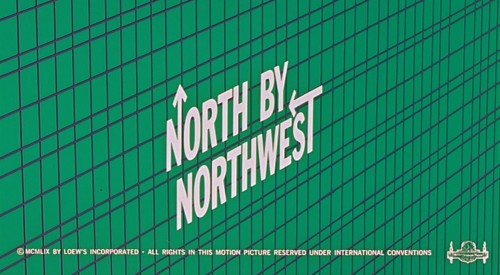
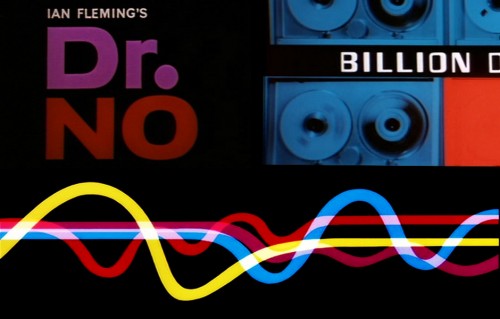
When the opening credits for an Alfred Hitchcock film start rolling, it’s impossible to not be instantly captivated. The simple concept, bold graphics, and dynamic animations are all evidence of Saul Bass’s genius at work.

Saul Bass began his career by designing print ads for movies. His first collaboration with director Otto Preminger was the film poster for Carmen Jones. From there, it seemed a natural progression for Bass to move from designing posters to some of the most memorable film title sequences in movie history. His best-known and often imitated work is Preminger’s Anatomy of a Murder.

Read the full post >

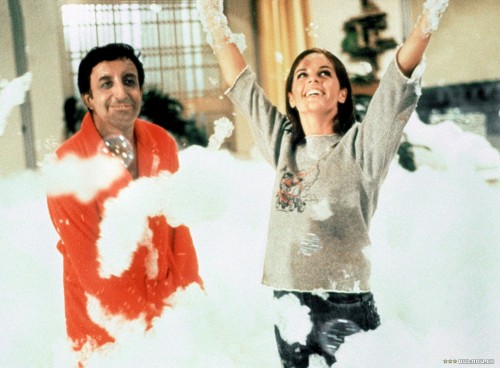
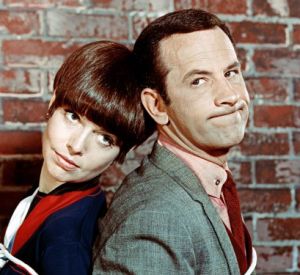
What happens when Blake Edwards, Peter Sellers and Henry Mancini collaborate on a motion picture? Usually, a Pink Panther movie. The exception was the 1968 comedy The Party, with Blake Edwards once again directing Peter Sellers and his antics to a swinging Mancini soundtrack.

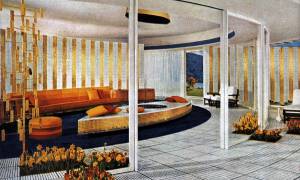
Edwards and Sellers team up to make a slapstick comedy for the mod set. The result is a smorgasbord of sight gags presented on a set that might be every mid-century enthusiast’s dream home. Scenes are stolen from Sellers by two things: Levinson, the drunken waiter (played by Steven Franken) and the house. If you love 1960s architecture, you may excuse the extended visual jokes to take in the details of this ultimate party house—the sunken conversation pit, the spiral staircase, the indoor waterways, and the outdoor pool area.

Read the full post >

Since the turn of the 20th century, Coca-Cola and Pepsi have been fighting to capture the hearts and taste buds of America’s youth. Fifty years into the great carbonation beverage battle, cola companies decided to look for new opportunities and target demographics. In an attempt to lure in diabetics, the cola companies began developing and marketing low-calorie, sugar-free alternatives. As early as the 1950s, Royal Crown and Dr. Pepper distributed dietetic versions of their beverages. But it wasn’t until the early 1960s that the major players entered the diet cola market. In 1963 Coca-Cola released Tab and Pepsi introduced Patio.

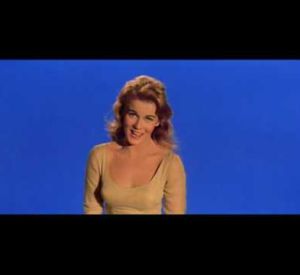
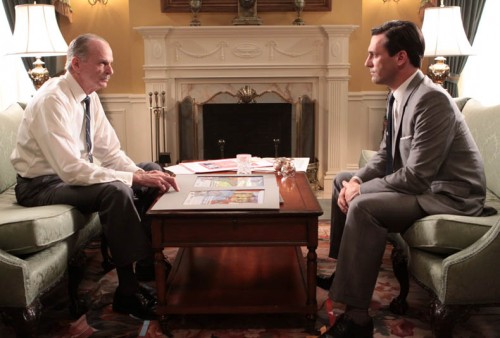
In the Mad Men world, the Patio account comes to Sterling Cooper in the hopes of attracting female sippers. The client wants a commercial similar to the Ann-Margret’s performance of Bye Bye Birdie. The men justify the idea with the theory that “Men want [Ann-Margret] and women want to be her.” Peggy remains unconvinced, arguing that, once again, women were being sold a product based solely on the desires of men.

Read the full post >

Our latest adventures in space and time