The Unofficial Mad Men Cookbook – Inside The Kitchens, Bars, and Restaurants of Mad Men

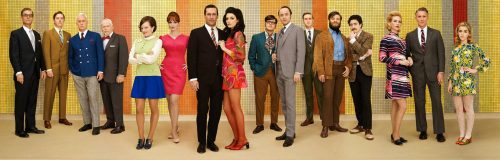
Paradigm shift. If you could boil down into a phrase what Mad Men is about, it would be “mid-century paradigm shift.”

Mad Men explores it on the large scale: Clueless about how to sell coffee to young adults, the men of Sterling Cooper attempted to shoehorn the Port Huron Statement into their ad campaign. They completely missed the point because the cultural paradigm was changing.

Mad Men also explores it on the small, personal, scale: Peggy Olson was quite happy to advance to the new paradigm and be a sexually liberated woman; But she only went halfway and was institutionalized when unable to face the consequences in Pete’s illegitimate child.

Mad Men even explores it on the minuscule scale: It’s found in minor details often ignored on TV but which Mad Men has made a point of getting right — clothes, hairstyles, daily living, and food.

Read the full post >

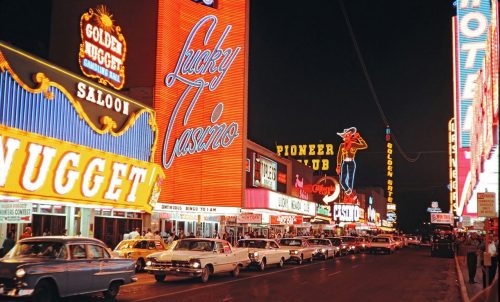
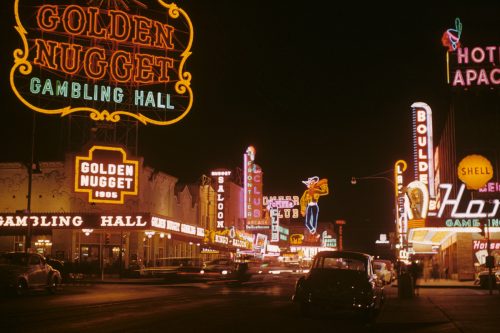
When The Mob Ran Vegas

On September 7, 1963, during a performance at the Sands Hotel and Casino in Las Vegas, Dean Martin joked “Right now, ladies and gentlemen, somewhere backstage, Frank Sinatra is punching a dealer right in the mouth.” Little did Martin know that four years later, Sinatra actually would start a fight with a Sands pit boss over revoked casino credit — only, in the end, it was Sinatra who received the pop to the mouth.

The golden age of Las Vegas was the 1950s and early 60s — the Rat Pack era. Who made it that way? The Mob. What did they do? They ran gambling operations of every kind. And it was the worst kept secret in America. Everyone knew that it was mobster Bugsy Siegel who built one of Vegas’s crown jewel casinos, The Fabulous Flamingo. And it still stands today — although it’s been properly sanitized, corporatized, and remodeled.

Read the full post >

Ultra Swank – Your one stop blog for retro living, style and design

Ultra Swank takes you back in time into the kitsch, chic and swank living of the 50s, 60s and the 70s. We mainly focus on the design, architecture and the lifestyle of the happy-go-lucky and space-age-living mentality of that era – but also on the music and movies that takes you back to happier times. Ultra Swank is run by Chris, a Swede born in the wrong decade that currently resides in Barcelona. Read more

Subscribe and follow Ultra Swank

Cocktail Nation – The Interviews

Mid-century retro goes by many names — Retro culture; Atomic culture — and it sometimes overlaps with many other subcultures like kustom kulture (i.e. hot rod & rockabilly fans); tiki culture, and even Goth. My preferred term for this subculture is Lounge Revival.

To the outside observer, it would seem that the only thing your average Lounge Revivalist is interested in is dressing up in old clothes and drinking himself silly in a bar that has seen better days. And while Jeff “Beachbum” Berry’s popular cocktail books would reinforce that idea, in truth not every lush is a Lounge Revivalist. (And not every Lounge Revivalist is a lush.)

No, regardless of their chosen flourishes — rockabilly, tiki, noir, what lies in the heart of a true Lounge Revivalist is a romantic streak and a wistful love of things others have discarded. You can see it in the woman wearing a Jackie Kennedy pill box hat, in the man sporting a pair of leopard creepers, or even in the noirish goth-a-billy guy buying old Esquivel! records at the thrift store for $10 a stack. Australian DJ Koop Kooper would call all these people members of Cocktail Nation.

Read the full post >

Burlesque Poster Design

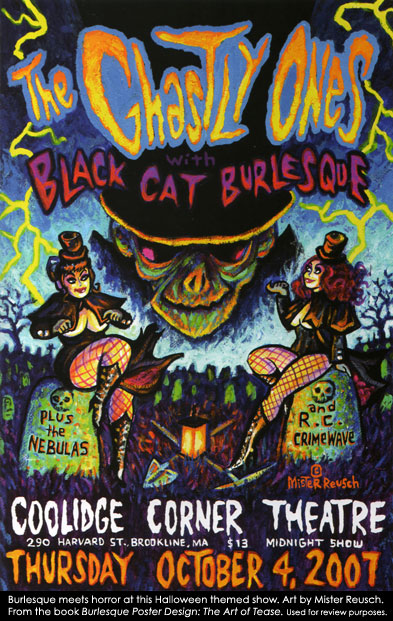
Gypsy Rose Lee. Tempest Storm. Lily St. Cyr. If there’s one word associated with these famous women, it’s “burlesque.”

In the modern sense of the word, burlesque was a popular form of theatrical variety show featuring risqué comedy, parody, and pastiche. When it was exported from Victorian England to the United States in the 1840s, American elements were added: minstrel show performances, stage magic, contemporary athletics, and, most importantly, exotic dancing.

One hundred years later, all pretenses to high-brow art had been gradually abandoned. Striptease was now the main attraction at burlesque shows. Vaudeville-style comedians, preceding and introducing each performer, were the only elements left from the original form. The performances of the 1940s, 50s, and 60s, — what’s remembered fondly as the heyday of American burlesque — were actually the nadir of the original art.

Read the full post >

Pad – The Guide to Ultra Living

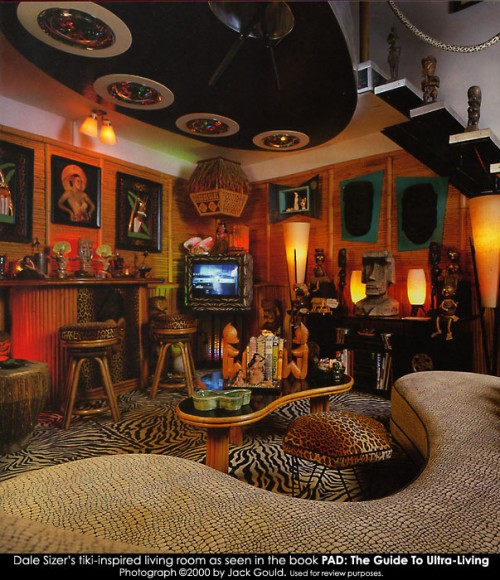
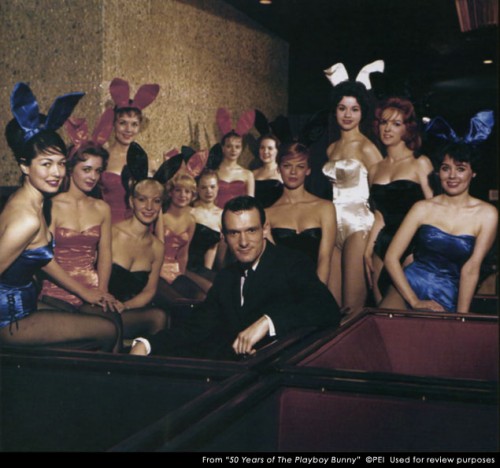
Thanks to a post-World War II economic and technological boom, the 1950s and early 60s was the golden age for the bachelor lifestyle. With the advent of Playboy magazine, the quintessential guide to urban living, it reached critical mass. Armed with affluence, abundant leisure time, and the sagacity of Saint Hefner, bachelors found themselves with two things: freedom and optimism.

The ultimate expression of this was the bachelor pad. More than just a place to dwell, the bachelor pad was a place to work, play, and truly live. It was a micro-world outfitted and dressed in whatever manner Playboy and one’s wallet decided.

Read the full post >

Monte – King of Atom Age Monster Decals

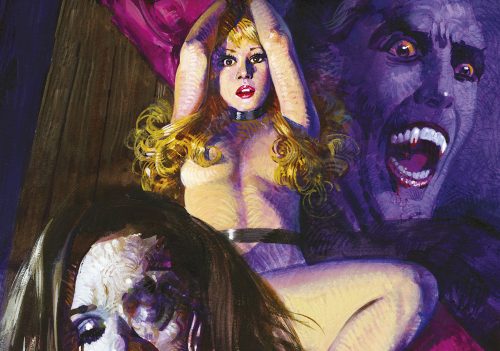
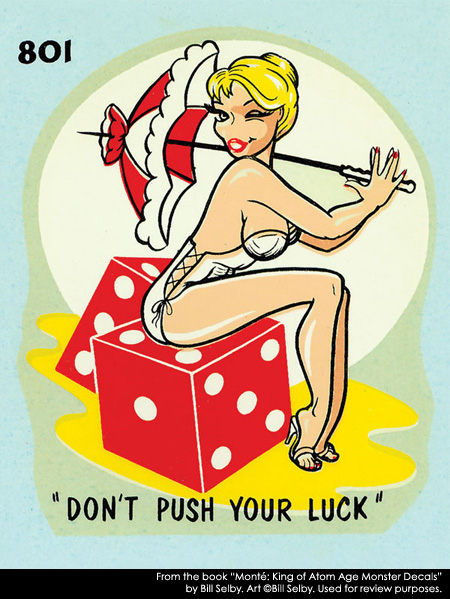
In America, the 1950s and 60s spawned The Monster Kids. These were kids, mostly pre-adolescent boys, who assembled Aurora model kits of Frankenstein or Dracula after school; read Tales From The Crypt comics with a flashlight under the covers at bed time; and sneaked downstairs on Saturdays to watch the late-night horror movie show on TV with spooky hosts like Zacherle, Chilly Billy, or Ghoulardi. And they discussed it all in their super-secret tree houses on Sunday — no girls allowed.

Some of these youngsters went on to become highly influential adults in genre entertainment: horror novelist Stephen King; fantasy film directors John Landis, Joe Dante, and Steven Spielberg; and shock rock musician Gene Simmons of the band KISS are but a few of many Monster Kids who turned their obsessions into their careers.

Read the full post >

The Wonderful Future That Never Was

“Here at home we’ll play in the city. Powered by the sun. Perfect weather for a streamlined world. There’ll be Spandex jackets – one for everyone.”
- Donald Fagen, “I.G.Y.”

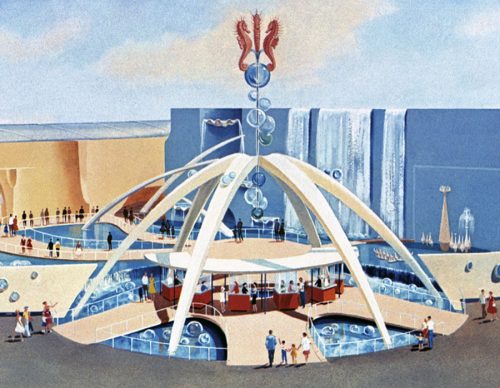
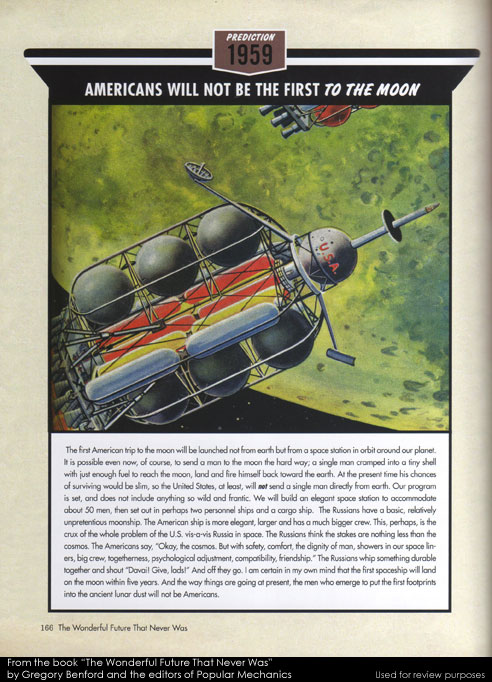
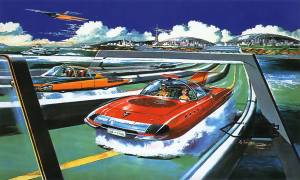
Americans of the 1950s and early ’60s had a love affair with technology that, some would say, continues to this day. Nineteen fifty seven saw global scientific cooperation with the beginning of the I.G.Y., the International Geophysical Year. And 1966 saw the conceptualization of EPCOT, Walt Disney’s “City of Tomorrow.” Post-war optimism and sustained scientific innovation led many to believe that an American utopia would be achieved through technology. It wasn’t called “The Atomic Age” for nothing.

Fanning the flames of American faith in technology was Popular Mechanics magazine. Along with competitor Popular Science, Popular Mechanics brought science and technology into the homes of average Americans with easy straight-forward language.

Read the full post >

Our latest adventures in space and time