Mad Men’s Bacardi-fueled Fantasies

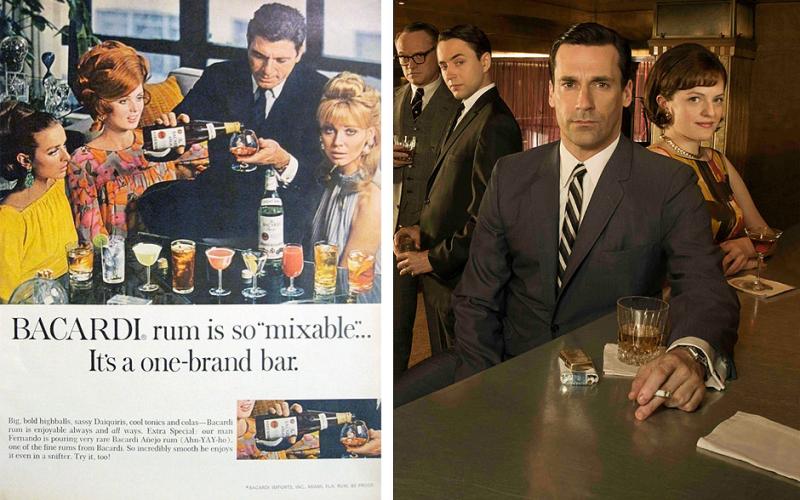
While the rest of the Sterling Cooper staff attends a Kentucky Derby party thrown by Roger Sterling and new wife Jane, Peggy and the other writers are stuck in the office to brainstorm ideas for the Bacardi campaign. Bacardi is looking for five vacation situations for their overall concept “Daiquiri Beach.”

Peggy and the boys sip on Bacardi for inspiration but find none. Copywriter Paul snits, “We’re supposed to sit here and pretend we’re on vacation?” Peggy and Smitty try wordplay with portmanteaus like “Bacardi-licious” and “Bacardi-Eisenhower.” After some deliberation and experimentation with non-alcoholic substances, Peggy begins developing an idea that we often see in today’s beer and cocktail campaigns—the idea that alcohol can whisk us away to some exotic paradise without ever leaving home. Visualizing a hammock set up on a city rooftop, Peggy turns Paul’s negativity into a positive selling point.

Read the full post >

Charles Schridde’s Vision of the Future

Charles Schridde’s illustrations from the early 1960s for Motorola is a great example of the future that never was. The ads were often featured in Life Magazine and depicted a lush, comfy and elegant future, conveniently centered around various Motorola products. I for one, wouldn’t mind living in a pad like the ones Mr. Schridde envisioned. I guess the closest thing would be Disney’s House of the Future. (Via)

Ultra Swank – Your one stop blog for retro living, style and design

Ultra Swank takes you back in time into the kitsch, chic and swank living of the 50s, 60s and the 70s. We mainly focus on the design, architecture and the lifestyle of the happy-go-lucky and space-age-living mentality of that era – but also on the music and movies that takes you back to happier times. Ultra Swank is run by Chris, a Swede born in the wrong decade that currently resides in Barcelona. Read more

Subscribe and follow Ultra Swank

Since the turn of the 20th century, Coca-Cola and Pepsi have been fighting to capture the hearts and taste buds of America’s youth. Fifty years into the great carbonation beverage battle, cola companies decided to look for new opportunities and target demographics. In an attempt to lure in diabetics, the cola companies began developing and marketing low-calorie, sugar-free alternatives. As early as the 1950s, Royal Crown and Dr. Pepper distributed dietetic versions of their beverages. But it wasn’t until the early 1960s that the major players entered the diet cola market. In 1963 Coca-Cola released Tab and Pepsi introduced Patio.

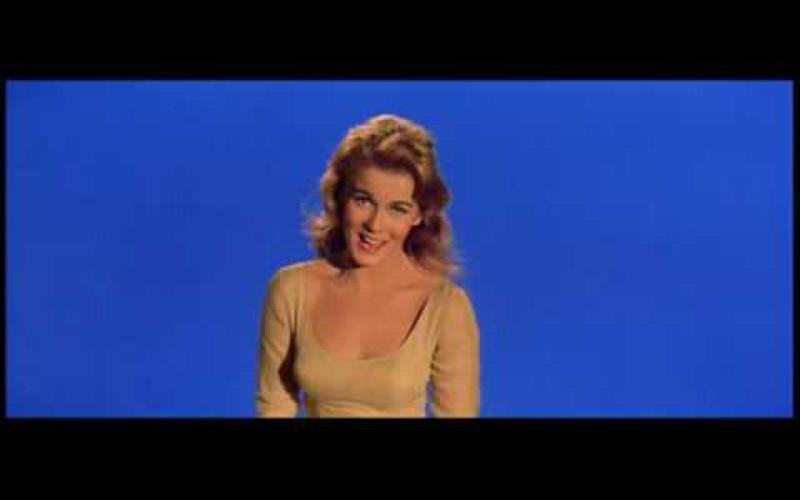
In the Mad Men world, the Patio account comes to Sterling Cooper in the hopes of attracting female sippers. The client wants a commercial similar to the Ann-Margret’s performance of Bye Bye Birdie. The men justify the idea with the theory that “Men want [Ann-Margret] and women want to be her.” Peggy remains unconvinced, arguing that, once again, women were being sold a product based solely on the desires of men.

Read the full post >

Christmas gets endorsed by celebrities

When snow covers the ground and the days get shorter, you know it’s time to celebrate the winter holidays and spread cheer and good will. Even celebrities can’t resist the action, lending their talent and likeness to all manners of Christmas merriment. Popular personalities of stage, screen and song deliver messages of joy in the form of holiday specials (dramatic retellings of Dicken’s A Christmas Carol and hokey musicals), specially-themed television episodes, festive Christmas albums.

Sometimes celebrities assist retailers in promoting their products with the spirit of the season in mind. From luxury items like hi-fi stereos and liquor to the seemingly banal cellophane tape and fizzy antacid. Any commonly used product can be deemed gift-worthy when you put a celebrity in a Santa hat!

Read the full post >

Mad Men and Lucky Strike celebrate a “toasted” Christmas

As we see more and more public spaces become smoke-free, it’s easy to forget that smoking wasn’t always considered hazardous. In the days when it was socially acceptable to smoke, cigarettes were advertised on television and endorsed by popular celebrities and cartoon characters. A carton of cigarettes was considered an appropriate gift for children to give their fathers. In the Mad Men universe, where smoking is the norm and SCDP’s biggest client is a cigarette company, the oddest thing about Roger Sterling distributing cartons of Lucky Strike to his employees is that he’s wearing the Santa suit while doing so.

Read the full post >

Mad Men and Pond’s question whether a clean face leads to matrimony

As of 1965, women’s liberation has not yet pervaded mainstream culture. In season four of Mad Men, we get a taste of what’s to come as women become more independent and empowered. Despite the increase in seemingly independent women, including budding feminist, copywriter Peggy Olsen, most of the ladies inhabiting fictional 1960s NYC are marriage-minded and family-oriented.

When SCDP (Sterling Cooper Draper Pryce) lands the Pond’s cold cream account, Peggy pitches the idea of skin care ritual as indulgence, a way for women to focus on themselves rather than improving their appearance to attract a man. It’s an idea we’ve seen in countless modern-day advertisements—from chocolates and bubble bath to yogurt and laundry detergent. In opposition to Peggy is freelance copywriter Freddy Rumsen, who suggests positioning the product as a tool for matrimony, “Use Pond’s and you’ll get married.” Don approves Peggy’s “Indulge Yourself” campaign but submits to a focus group to determine whether regular women (SCDP secretaries) buy into it. An emotional focus group prompts Dr. Faye Miller, a market research consultant to second Freddy’s notion that women just want to get married. It remains unclear which direction SCDP went with Pond’s but it seems Freddy wasn’t too far off the mark with his idea…just 20 years too late.

Read the full post >

The Secret Life of Machines

Fellow fans of Ultra Swank are well aware that we are revelers in a cultural period of technology supreme. Be it Hi-Fi or Hydrogen Bomb if it had push buttons and chrome it was an object of desire! Few artists captured this ‘age of the machine’ better than Boris Artzybasheff (1899-1965).

Immigrating from Russia to New York City in 1919, Artzybasheff’s career included over 200 Time Magazine covers and illustrations for over fifty books. He was a sought after advertising illustrator with clients including many of the Fortune 500. Looking at his style it’s not surprising that he was also an advisor to the Psychological Warfare Department of the U.S. during World War 2! Although he was capable of very realistic renderings, it was his surreal creations of machines as living creatures (a hidden vanity of technology) which endears him in the hearts of mid-century mavens of today.

His book As I See: The Fantastic World of Boris Artzybasheff is available to buy from Amazon for anyone who wants to dig deeper into Boris’ fantasy world.

Our latest adventures