A Mid-Century Shopping Centre in Northern Sweden

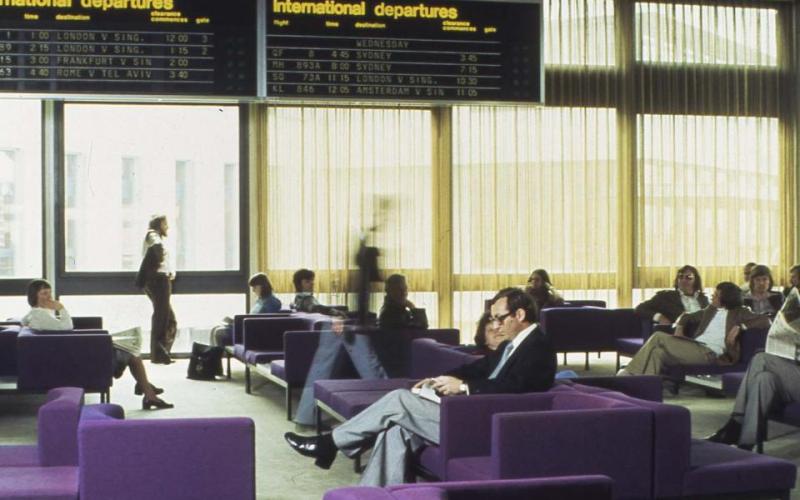
Shopping is one of Europe’s first interior shopping centers ever built. This mid-century gem is hidden away in the cold northern parts of Sweden. It was designed by famous British-Swedish architect Ralph Erskine and built in 1955. Erskine wanted to create something that would be enjoyable for everyone all year round, not being dependent on the current (and sometimes harsh) weather conditions.

The shopping centre was to become a natural meeting point for everyone in the city and to offer both entertainment, dining and plenty of merchandise and goods for all the family. It was nick named “a city within the city”. The unique floor plan of the shopping center features multiple levels that are offset to each other by half a level and all connected by numerous staircases and escalators – creating a maze that can be a bit confusing to navigate for first comers. The huge concrete pillars and walkways supporting the construction makes it a look a bit cold but at the same time very clean and easy on the eyes. This type of design was very popular throughout the 1950s, ’60s and ’70s – especially in northern Europe.

Read the full post >

Are we ready for The Jetsons yet?

What better epitomizes the visionary futuristic-utopia of the 20th century than the Jetsons? Created in 1962 the prime-time animated sitcom took place in 2062… looking 100 years into the future. Besides the futuristic gadgets and gizmos-surely ahead of their time-the architectural influence is clearly that of Googie design. Including “upswept roofs, curvaceous, geometric shapes, and bold use of glass, steel and neon, Googie was also characterized by space-age designs that depict motion, such as boomerangs, flying saucers, atoms and parabolas, and free-form designs such as ‘soft’ parallelograms and the ubiquitous artist’s-palette motif.” (Source)

Two prominent Googie designs clearly inspired the architectural structure used in the Jetsons series. Saarinen’s TWA terminal and the Seattle Space Needle. Worth noting is that both structures opened in 1962, the same year the Jetsons originally aired. In one of the 24 episodes, “A Date with Jet Screamer”, Judy Jetson is taken on her date with Jet Screamer to The Fun Pad, a space-age amusement park with Ferris Wheels, roller-coasters, and spinning rides. Coincidentally, Astro Land on Coney Island opened in 1962. It’s really quite rare and interesting that these architectural structures and their timelines, being so technically and aesthetically advanced for there time, would be simultaneously depicted in a prime-time animated sitcom—truly visionary.

Read the full post >

Ultra Swank – Your one stop blog for retro living, style and design

Ultra Swank takes you back in time into the kitsch, chic and swank living of the 50s, 60s and the 70s. We mainly focus on the design, architecture and the lifestyle of the happy-go-lucky and space-age-living mentality of that era – but also on the music and movies that takes you back to happier times. Ultra Swank is run by Chris, a Swede born in the wrong decade that currently resides in Barcelona. Read more

Subscribe and follow Ultra Swank

A visit to London in 1957

A trip to yesteryear London in 1957, about a decade before the height of “Swinging London” with its youth oriented fashion, music, art and culture scenes. Places depicted are among others Cambridge Circus, Palace Pier and Trafalgar Square. What do you prefer, London in 1957 or 2011? Photos by Kai Krog Halse (Via)

Charles Schridde’s Vision of the Future

Charles Schridde’s illustrations from the early 1960s for Motorola is a great example of the future that never was. The ads were often featured in Life Magazine and depicted a lush, comfy and elegant future, conveniently centered around various Motorola products. I for one, wouldn’t mind living in a pad like the ones Mr. Schridde envisioned. I guess the closest thing would be Disney’s House of the Future. (Via)

Montréal Expo 67

Few events encapsulate the aura of the 1960s like Expo 67. Looking back at the photos and videos of the exhibition, one can get a good idea of the fashions, behaviors, and attitudes of the era. This World’s Fair, one of the most popular, was an overwhelming spectacle of delights for all in attendance.

Read the full post >

Cruisin’ to the Wich Stand

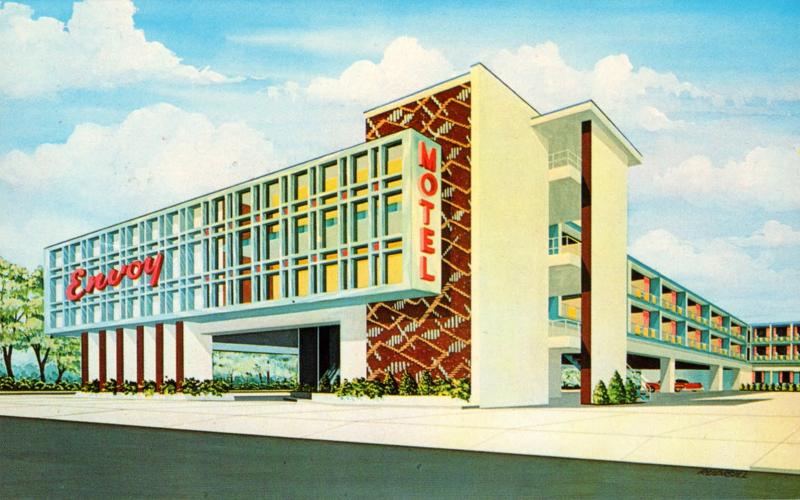
The origins of “Googie” design can be traced back to the actual coffee shop designed by architect John Lautner and by the works of his contemporaries. Appearing first in commercial buildings and used primarily in designing restaurants, coffee shops, motels, gas stations and bowling alleys, as well as schools, churches, shopping centers and airline terminals, this style of design was directed at the masses for commercial purposes. In Los Angeles, where Googie began, the 1930’s brought a large influx of the automobile and service industries. So the design aspects of Googie were heavily influenced by America’s new car culture.

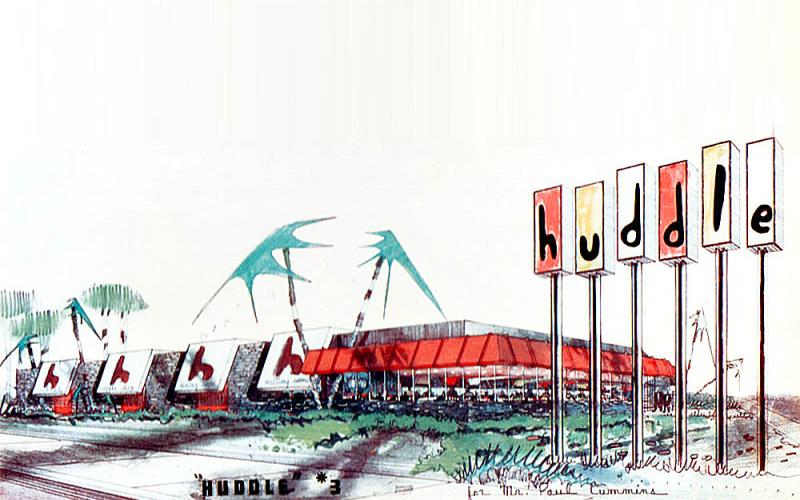
Owning a car meant freedom for the old idea of a central “downtown” and the sprawling suburbs of L.A. grew in every direction. By the 1950’s everyone owned at least one car and fast food drive-ins were appearing in neighborhoods and on roadsides everywhere. Bold, dynamic architecture was used to attract customers whizzing by on roads and highways—to catch their eye—beckoning them off the street. Drive-ins (diners, movie theaters, gas stations) had advanced this car-oriented architectural design. They were essentially architectural billboards advertising the business to vehicles on the road. By using distinct styling, high energy silhouettes, large pylons with elevated signs, bold neon letters and circular parking lots the architecture worked to make the most of strip malls and other roadside location while allowing customers easy access from their cars.

Read the full post >

Memories, Modernism and Our Concepts of a Misremembered Future

The recent exhibit of Deborah Aschheim’s drawings and architectural installations at Edward Cella A+A focused attention to the iconic modernist landmarks of Southern California that once represented the future. Aschheim’s works documented these structures, once the symbols of Southern California’s utopian dreams, which are now forlorn, crumbling commercial towers, buildings, and centers. Treated for the most part as “unacclaimed” monuments of a distant era, Ascheim described the buildings as a “visual gulf between then and now.”

“When I was growing up, the future was a limitless possibility, jet-aged, space-aged, techno-utopia. ‘Modern’ meant new. Now, modern means old, and the future I grew up with seems dated, irresponsible, and obsolete,” claimed Aschheim.

Aschheim made several visits to each site, and she created her unique works over time. Aschheim explained, “I have been urgently seeking out the buildings, flying and driving and taking trains to them before they are erased. I don’t want to go inside the buildings. I circle them, trying to understand them before they are removed or renovated into the present. It is a strange way to feel about architecture. I am drawing them and building them, somewhat inaccurately and not to scale, entombed in imaginary scaffolding. I am the same age as the buildings. It is a kind of self-portrait.”

Read the full post >

Our latest adventures