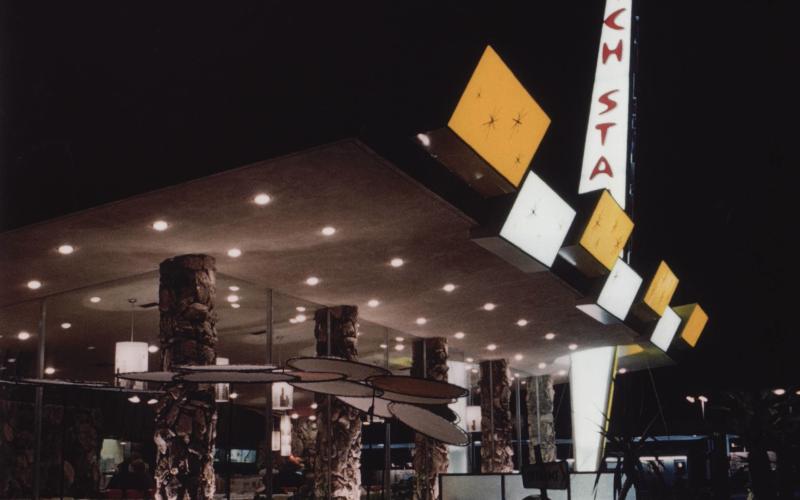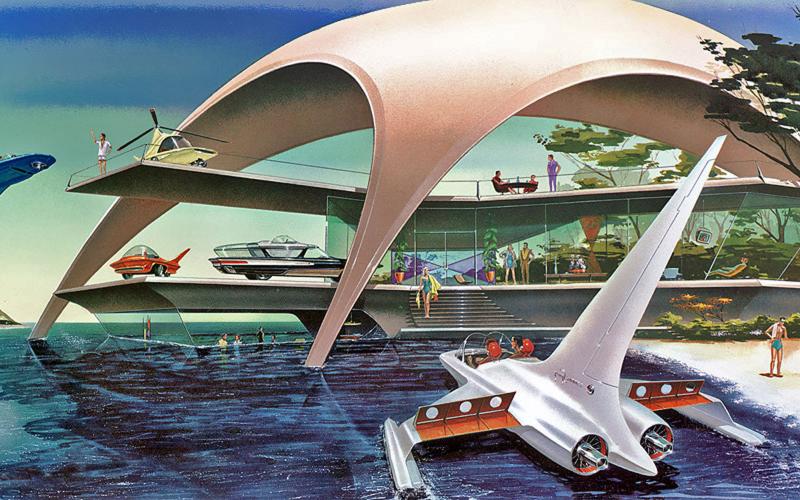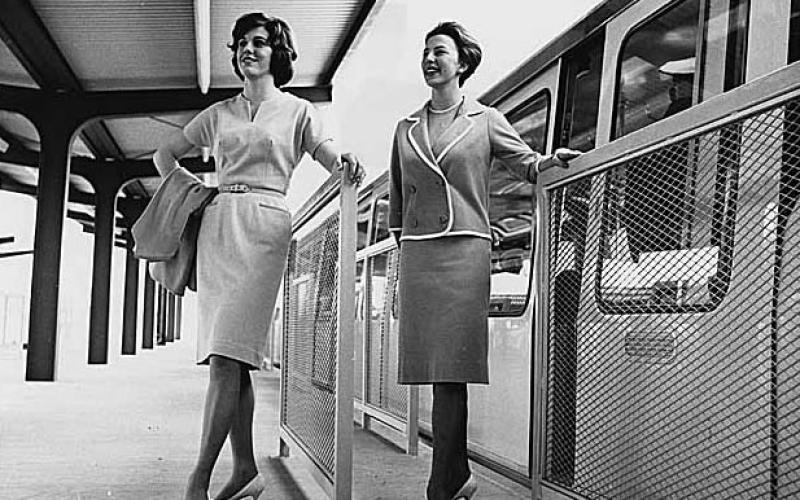
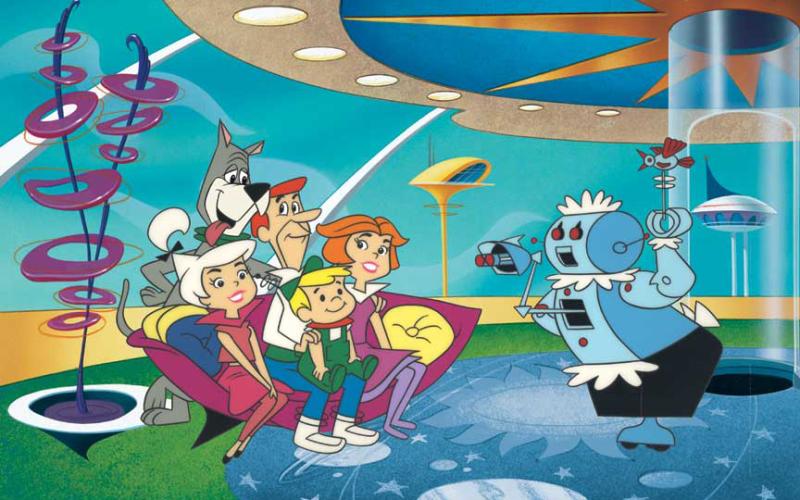
Architecture What better epitomizes the visionary futuristic-utopia of the 20th century than the Jetsons? Created in 1962 the prime-time animated sitcom took place in 2062… looking 100 years into the future. Besides the futuristic gadgets and gizmos-surely ahead of their time-the architectural influence is clearly that of Googie design. Including “upswept roofs, curvaceous, geometric shapes, and bold use of glass, steel and neon, Googie was also characterized by space-age designs that depict motion, such as boomerangs, flying saucers, atoms and parabolas, and free-form designs such as ‘soft’ parallelograms and the ubiquitous artist’s-palette motif.” (Source) Two prominent Googie designs clearly inspired the architectural structure used in the Jetsons series. Saarinen’s TWA terminal and the Seattle Space Needle. ( continue reading... )

The Cocktail Nation - Queens Of Vintage

Episode 266    May 12th 2013

This week we talk to the publisher of an online magazine called Queens Of Vintage, her name is Lena Weber and recently she interviewed me in her kings of vintage portion of the website so I thought we should have her on to talk vintage culture and the English scene. Plus the best exotica and lounge music from across the globe.

Architecture The origins of “Googie” design can be traced back to the actual coffee shop designed by architect John Lautner and by the works of his contemporaries. Appearing first in commercial buildings and used primarily in designing restaurants, coffee shops, motels, gas stations and bowling alleys, as well as schools, churches, shopping centers and airline terminals, this style of design was directed at the masses for commercial purposes. In Los Angeles, where Googie began, the 1930’s brought a large influx of the automobile and service industries. So the design aspects of Googie were heavily influenced by America’s new car culture. Owning ( continue reading... )


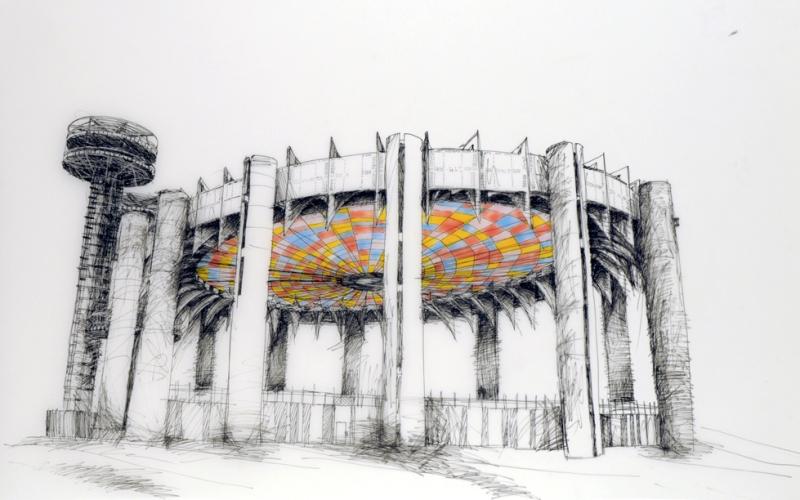
Architecture The recent exhibit of Deborah Aschheim’s drawings and architectural installations at Edward Cella A+A focused attention to the iconic modernist landmarks of Southern California that once represented the future. Aschheim’s works documented these structures, once the symbols of Southern California’s utopian dreams, which are now forlorn, crumbling commercial towers, buildings, and centers. Treated for the most part as “unacclaimed” monuments of a distant era, Ascheim ( read more... )

Design It was with reluctance that I took on Ultra Swank’s assignment of a segment on Googie design. I am not an expert. Art historians and critics can be a vicious group. One false move and I could be forever condemned to an underworld of Louis the XIV basement rec. rooms accented with a million velvet Elvis paintings! Oh well, maybe they’ve got some Pepsi in ( read more... )

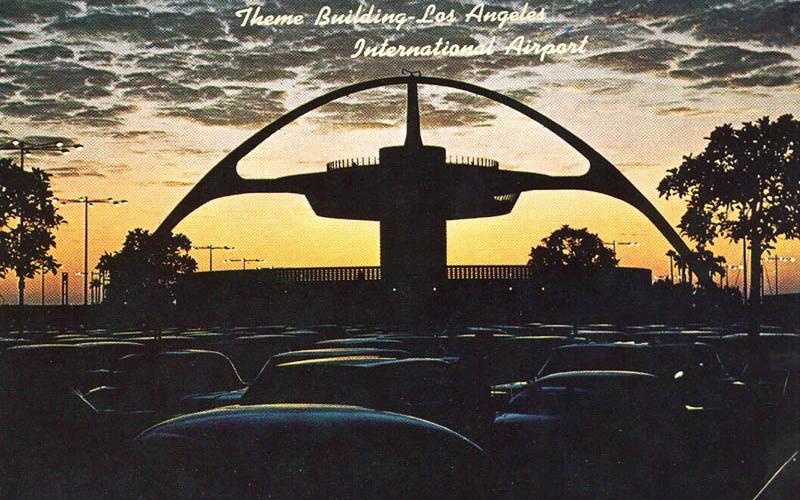
Travel This is Los Angeles International Airport (Jetport), it was built in the late 1950s and was at the time one of the biggest airports in America. They first envisioned it to be even bigger in the anticipation of the “jet age” with lots of terminals and buildings connected through a huge steel-and-glass dome building but the plan was deemed unrealistic and scrapped. Instead the famous ( read more... )

Event I wish there were more expositions like the one held in Seattle in 1962. Going under the name Century 21, it showcased the best, brightest and most future minded technology available at the time – including pagers, exciting cars that looked like they could fly, various satellites and the NASA Mercury project to name a few. The grounds of the fair were divided into different ( read more... )