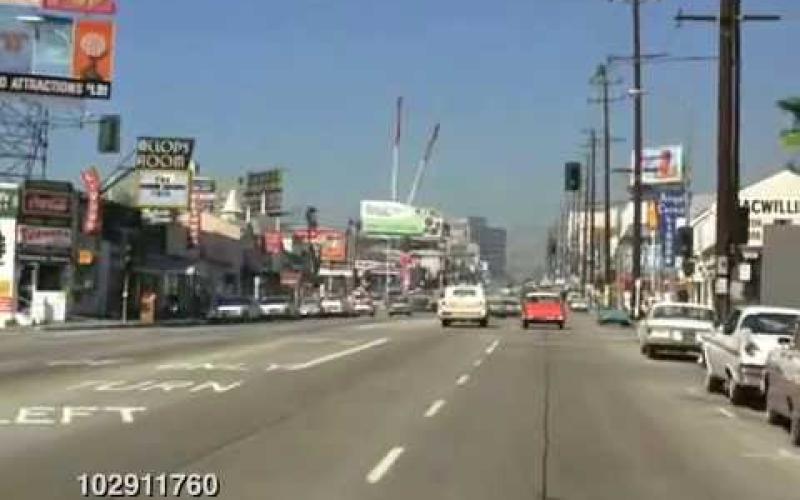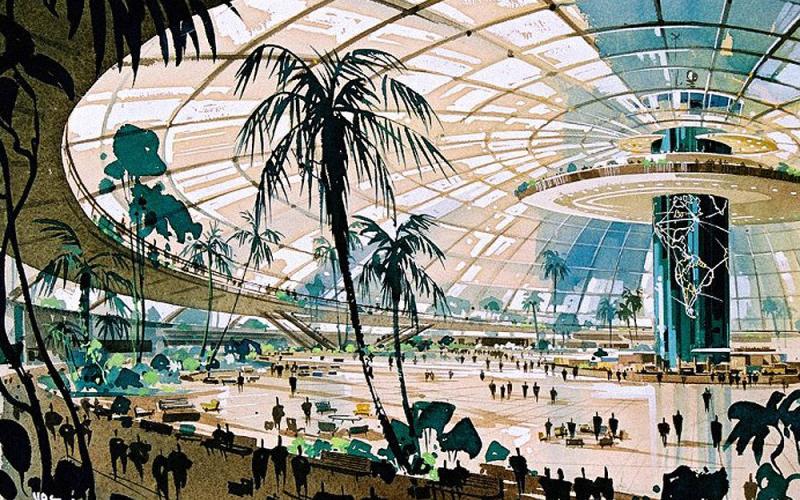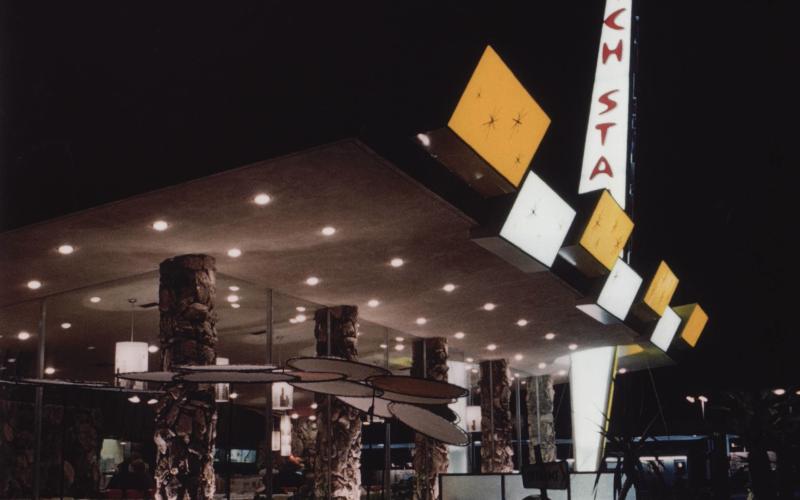
The origins of “Googie” design can be traced back to the actual coffee shop designed by architect John Lautner and by the works of his contemporaries. Appearing first in commercial buildings and used primarily in designing restaurants, coffee shops, motels, gas stations and bowling alleys, as well as schools, churches, shopping centers and airline terminals, this style of design was directed at the masses for commercial purposes. In Los Angeles, where Googie began, the 1930’s brought a large influx of the automobile and service industries. So the design aspects of Googie were heavily influenced by America’s new car culture.
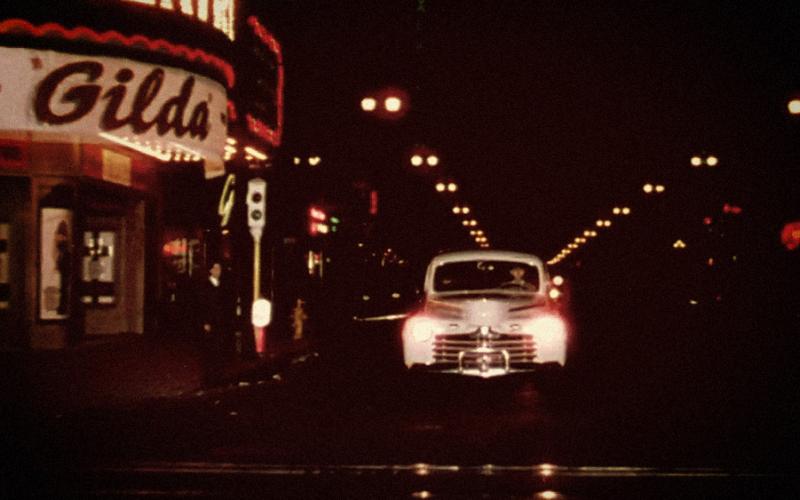
Owning a car meant freedom for the old idea of a central “downtown” and the sprawling suburbs of L.A. grew in every direction. By the 1950’s everyone owned at least one car and fast food drive-ins were appearing in neighborhoods and on roadsides everywhere. Bold, dynamic architecture was used to attract customers whizzing by on roads and highways—to catch their eye—beckoning them off the street. Drive-ins (diners, movie theaters, gas stations) had advanced this car-oriented architectural design. They were essentially architectural billboards advertising the business to vehicles on the road. By using distinct styling, high energy silhouettes, large pylons with elevated signs, bold neon letters and circular parking lots the architecture worked to make the most of strip malls and other roadside location while allowing customers easy access from their cars.

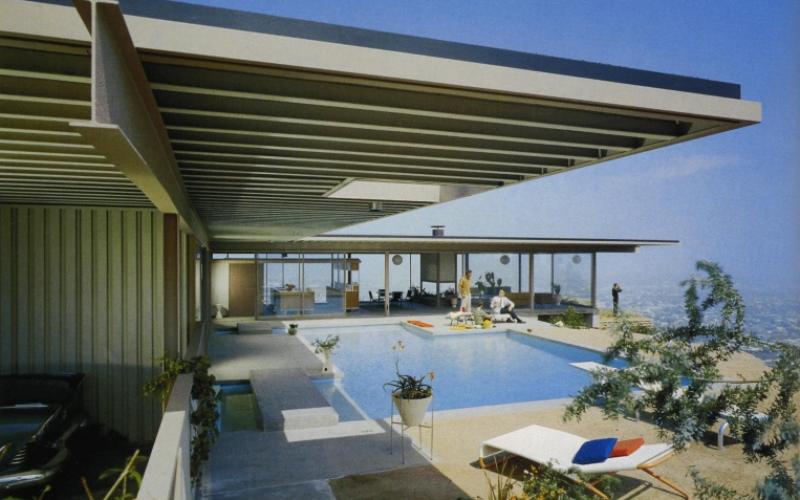
The Stahl house, designed by architect Pierre Koening in 1960 will be open to visitors for a limited time. The house was built part of the Case Study House experiments for residential housing sponsored by Arts & Architecture magazine, which hired major architects including Charles and Ray Eames, Pierre Koenig and Eero Saarinen, to design and build inexpensive model homes for the housing boom caused by the end of World War II. There were in total over 30 houses built and no. 22 is without a doubt the most stylish and famous one. Located on a hill in West Hollywood, overlooking downtown LA it features large windows, a pool and design to die for. For anyone who is in or near Los Angeles, don’t miss out on this opportunity to travel back in time to a iconic architectural landmark. For information about the tours and prices, follow the link below. (Via)
Ultra Swank – Your one stop blog for retro living, style and design
Ultra Swank takes you back in time into the kitsch, chic and swank living of the 50s, 60s and the 70s. We mainly focus on the design, architecture and the lifestyle of the happy-go-lucky and space-age-living mentality of that era – but also on the music and movies that takes you back to happier times. Ultra Swank is run by Chris, a Swede born in the wrong decade that currently resides in Barcelona. Read more
Subscribe and follow Ultra Swank

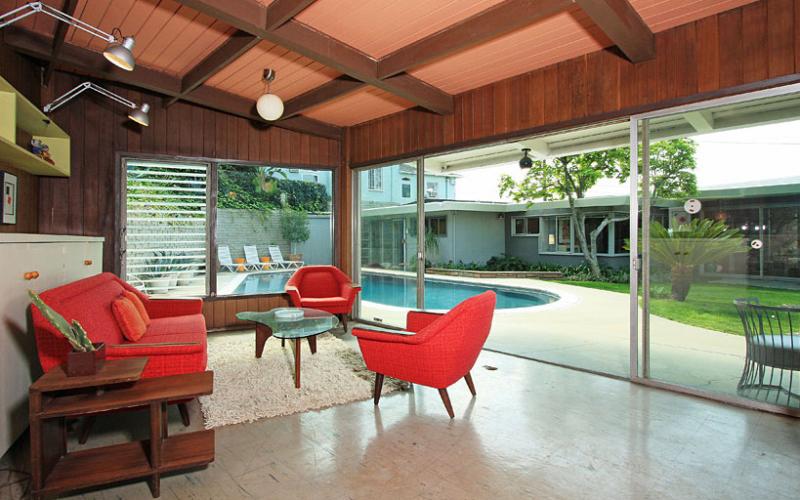
Located in Los Feliz, in the East Hollywood district of Los Angeles, this stylish 1953 house going under the name “The Chew House” was built by architect Eugene Kinn Choy and is now up for sale if you got a cool $1,850,000 to spend. What fascinates me about this property is that there are so many original elements still intact, from the the tiles to the bathroom decor. The house features 4 large bedrooms and 5.5 bathrooms (don’t ask me what’s up with that half bathroom) along with a salt water swimming pool and a large kitchen overlooking the pool. I am imagining that this house would be quite the bachelor pad for the man about town. If you want to put in a offer on this mid-century gem of a house, head over to estate agent Jeffery Young’s dedicated website about the property. (Via)