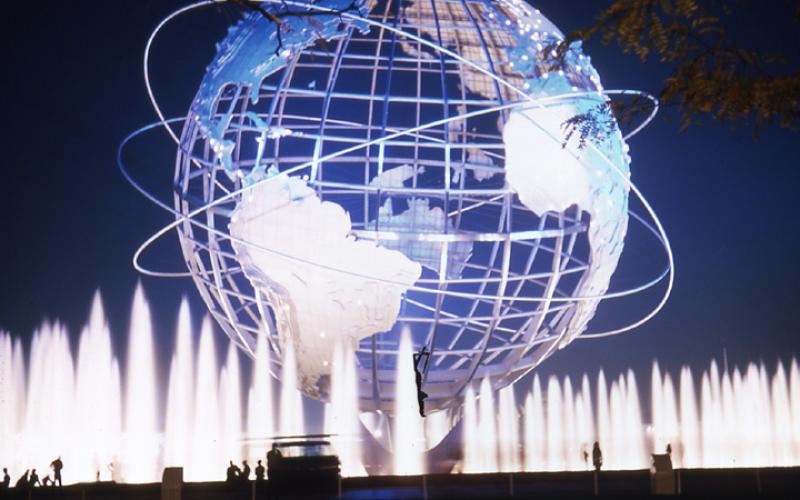
Of the three World’s Fairs set in North America in the 1960s, the 1964 fair is the most memorable and oft-cited. It wowed the young generation of Boomers with technological wonders and forward-thinking ideas. It gave us a few of the most beloved Disney attractions. And yet, it wasn’t really a World’s Fair.
Hopes an economic boom through tourism inspired the planning of the 1964-65 New York World’s Fair. Unfortunately, the Bureau of International Expositions (BIE) rules stated that only one exposition be permitted in any country within a 10-year period. Seattle hosted the World’s Fair in 1962. Plans for the New York fair were put into action anyway, without BIE endorsement and participation for most nations. The result was an exposition dedicated to American technology and innovation. Smaller and third world nations, including Ireland, Austria, Pakistan, and Vatican City, made up the international presence at the Fair. The rest of the fair was dominated by state and corporate pavilions.

The religion of The Atom died with Three Mile Island and Chernobyl. With that fall from grace came the end of many of our utopian dreams. A responsible future of conservation and organic carrots just wasn’t very exciting.
Although widespread use of the atom remains controversial; 436 reactors remain the source of 15 per cent of the world’s electricity. In some European countries atomic power accounts for over one third of electrical generation. China has 27 under construction.
Despite the decades of public relations and meaningful scientific progress the atomic genie is still threatening. The fundamental parable of science for good or evil is still a question mark. We are now living in the ‘future’ and we are all part of the ongoing experiment.
Ultra Swank – Your one stop blog for retro living, style and design
Ultra Swank takes you back in time into the kitsch, chic and swank living of the 50s, 60s and the 70s. We mainly focus on the design, architecture and the lifestyle of the happy-go-lucky and space-age-living mentality of that era – but also on the music and movies that takes you back to happier times. Ultra Swank is run by Chris, a Swede born in the wrong decade that currently resides in Barcelona. Read more
Subscribe and follow Ultra Swank

Atomic power was projected to be very cheap. We were going to have electricity coming out of our ears! We would not have to import oil from crazy foreigners or dig up whole states looking for coal.
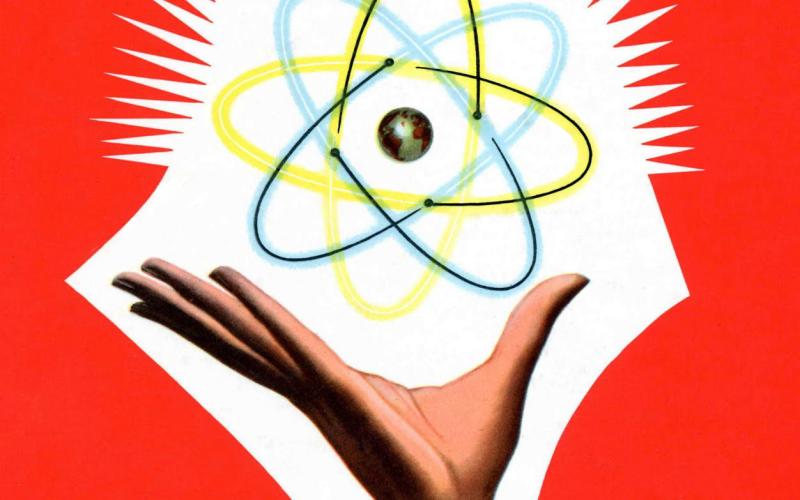
Utility companies and government agencies around the world took up the chant of the mighty atom. Nuclear power plants were seen as a springboard for third world countries to leap out of poverty and hunger. The symbol of electrons swirling around a nucleus looked cool and made keen designs for everything from lamps to automobile logos. Wildly illustrated magazine articles about a glorious ‘atomic age’ sold to junior mad-scientists and future minded suburban families. Atomic energy was a very bright and shiny promise.
Limitless power! The concept was intoxicating. We could air-condition entire cities, de-salt sea water, fly around the world on a pound of fuel, colonize space and then melt the ice-caps just for fun. Impossible notions of miniaturized atomic power cells spun fables of soon to come atomic powered cars, planes and even vacuum cleaners. Scientists started tests to see if hydrogen bombs could carve out instant canals and harbors.

No modern technology has ever had such a schizophrenic and complicated identity as Atomic Energy. It is often presented in mystical terms. A Pandora’s Box of knowledge that cannot be unlearned. The magical Genie that can do both help or harm but cannot be returned to his bottle. Nuclear Power is the ultimate parable of modern science.
With the use of atomic bombs at the end of World War II the world became aware of the god-like power of atomic fission. Newsreels of the horrible destruction and disfigured civilians created a closet of guilty conscience.
But stronger than the fears and guilt was optimism. There seemed to be no limit to what modern technology could accomplish. The idea of transforming the evil power that could destroy the world into an ultimate energy source to help mankind was irresistible. The peaceful use of atomic power; what would come to be called “Atoms for Peace”.
Would you believe that Mel Brooks and Buck Henry teamed up to create one of the funniest spy shows of the 1960s?
Capitalizing on the success of the James Bond franchise, television networks ordered a slew of espionage-themed programs. The Man From U.N.C.L.E, I Spy, Mission Impossible, and The Avengers brought a new level of sophistication to catching bad guys. These series used intelligence, ingenuity, and gadgetry to capture villains and save the world. Get Smart was created by Brooks and Henry to spoof the genre. The series drew inspiration from its serious counterparts and took scenarios and gadgets farther into the absurd.
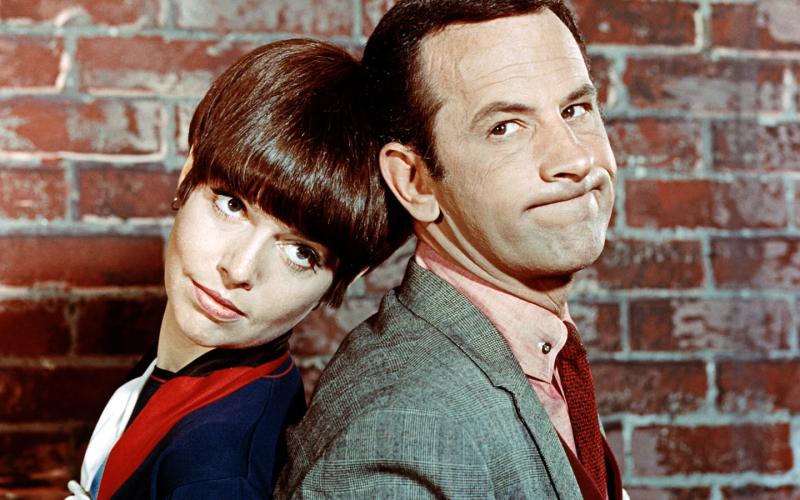
The complexities of espionage were simplified for the half-hour comedy format of Get Smart. Agent 86 Maxwell Smart (Don Adams) works for CONTROL, a U.S. spy agency focused on shutting down the evil organization KAOS. With the help of Agent 99 (Barbara Feldon), the Chief (Edward Platt), and a host of other CONTROL agents, the bumbling Agent Smart defeats KAOS villains at every turn. Also assisting Max is the latest in 1960s spyware.

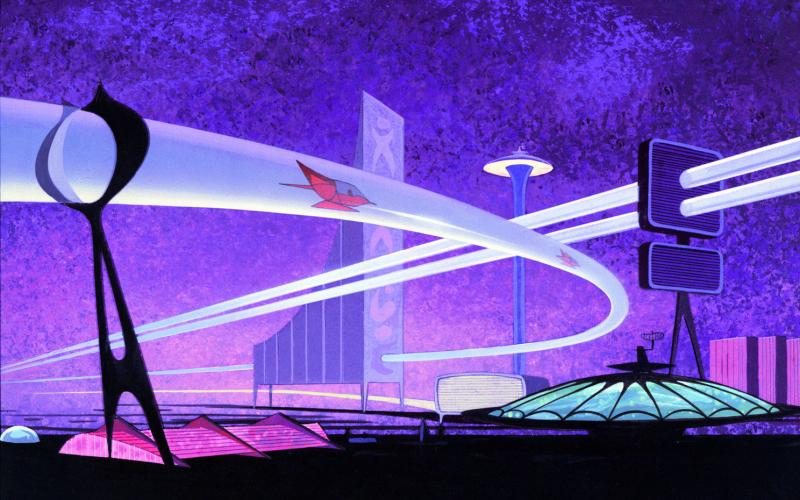
Let’s climb aboard the Alweg Monorail in Downtown Seattle and take a trip back to the 1962 World’s Fair: Man in the Space Age. The Century 21 Exposition brought the first World’s Fair in North America since 1940 and the United States was eager to demonstrate its new ideas and advancements in technology, science and entertainment. Rapid technological advancements, Googie architecture, and the Space Race tantalized imaginations with the possibilities of the 21st century and beyond. The Future promised push button telephones and flying cars. While innovations raced towards the future, values remained firmly rooted in the past. Kitchen gadgets targeted housewives while innovations in office communication targeted businessmen. Nuclear families would populate the suburbs of the Moon in the 21st century.

Few events encapsulate the aura of the 1960s like Expo 67. Looking back at the photos and videos of the exhibition, one can get a good idea of the fashions, behaviors, and attitudes of the era. This World’s Fair, one of the most popular, was an overwhelming spectacle of delights for all in attendance.