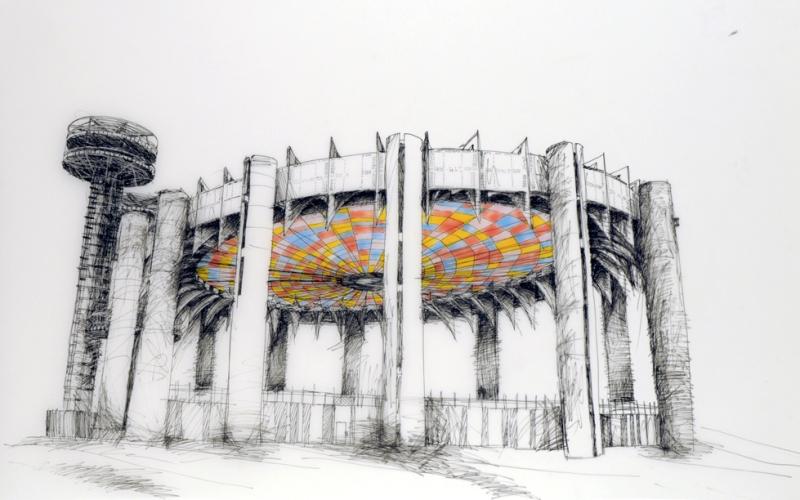
The recent exhibit of Deborah Aschheim’s drawings and architectural installations at Edward Cella A+A focused attention to the iconic modernist landmarks of Southern California that once represented the future. Aschheim’s works documented these structures, once the symbols of Southern California’s utopian dreams, which are now forlorn, crumbling commercial towers, buildings, and centers. Treated for the most part as “unacclaimed” monuments of a distant era, Ascheim described the buildings as a “visual gulf between then and now.”
“When I was growing up, the future was a limitless possibility, jet-aged, space-aged, techno-utopia. ‘Modern’ meant new. Now, modern means old, and the future I grew up with seems dated, irresponsible, and obsolete,” claimed Aschheim.
Aschheim made several visits to each site, and she created her unique works over time. Aschheim explained, “I have been urgently seeking out the buildings, flying and driving and taking trains to them before they are erased. I don’t want to go inside the buildings. I circle them, trying to understand them before they are removed or renovated into the present. It is a strange way to feel about architecture. I am drawing them and building them, somewhat inaccurately and not to scale, entombed in imaginary scaffolding. I am the same age as the buildings. It is a kind of self-portrait.”

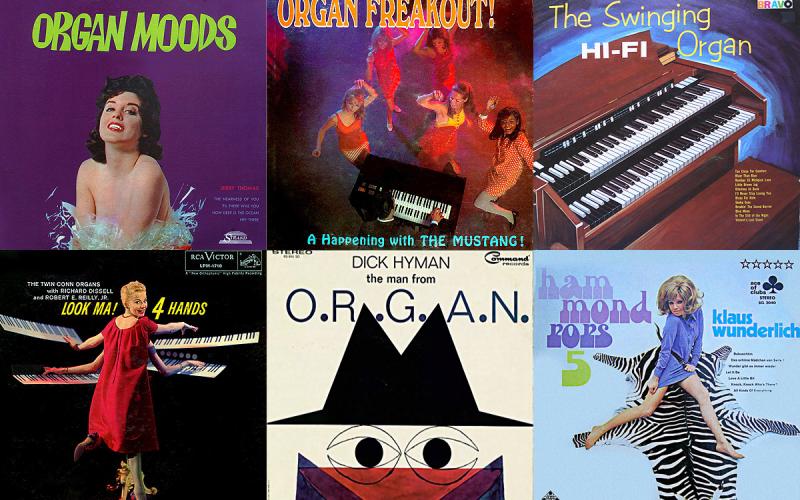
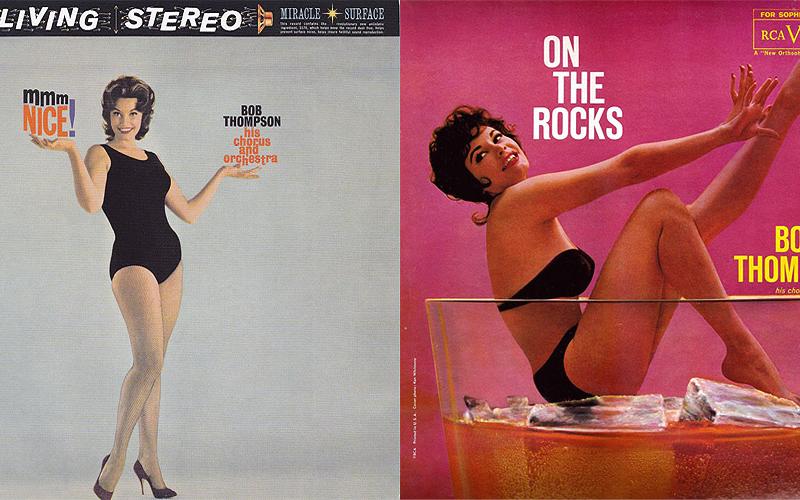
Originally developed in the 1930′s as a cheap alternative for small churches that could not afford a pipe organ, the electric organ became a fixture in millions of suburban homes during the 1950′s and 60′s. Along the way this all purpose instrument produced the melancholy soundtrack for countless soap operas, kept the beat at roller rinks and eventually was dipped in ‘acid’ and mutated into the keyboards of rock n’ roll and soul.
In the prosperous post war world, Lauren Hammond’s invention became the space-age equivalent of the piano in the parlor. Maybe the kids would put away that jungle music and gather with Mom and Pop around the Hammond for an old fashioned sing-a-long? The Hammond combined the nostalgia of home-made entertainment with the space-age. It was electric! It had more push buttons than a driveway full of Vista-Cruisers!
Ultra Swank – Your one stop blog for retro living, style and design
Ultra Swank takes you back in time into the kitsch, chic and swank living of the 50s, 60s and the 70s. We mainly focus on the design, architecture and the lifestyle of the happy-go-lucky and space-age-living mentality of that era – but also on the music and movies that takes you back to happier times. Ultra Swank is run by Chris, a Swede born in the wrong decade that currently resides in Barcelona. Read more
Subscribe and follow Ultra Swank
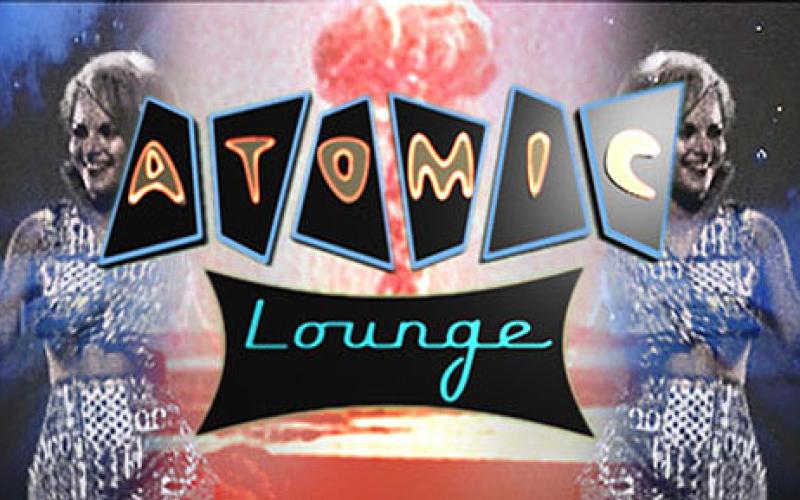
Atomic Lounge is a 90 minute documentary that looks back at the Space-Age inspired architecture, design, fashion, and lifestyle of post-WWII America. The film will explore the conditions that led to a unique time in history when Americans experienced a dual sense of optimism for the future and fear of impeding nuclear holocaust. This period represents the critical point in the Western world when a culture of sincerity, confidence and conformity gave way to a general atmosphere of irony and pessimism.
More information about the documentary at Scribble Media.

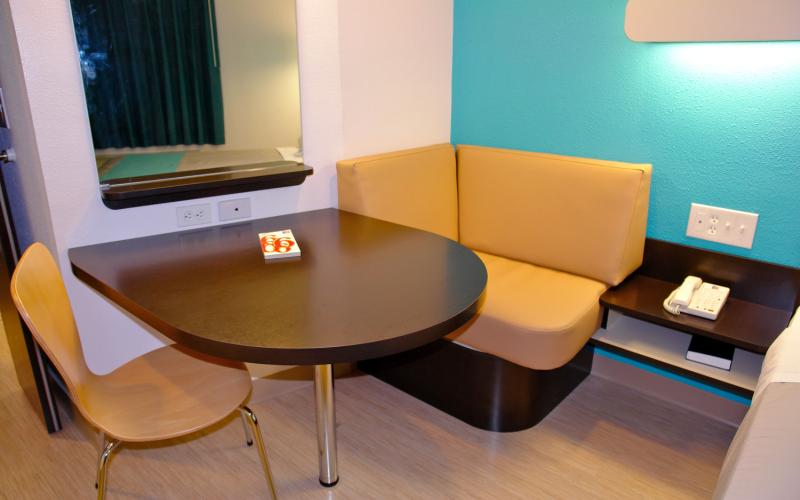
I had the occasion this past summer to stay in a Motel 6 here in the U.S. for the first time in many years. I was most pleasantly surprised at the new look of the room. It was simple, utilitarian, but perhaps best of all, something new in that it reminded me of mid-century America with a bit of a nod to Deco, 1950s “Space-Age” design and, perhaps, “The Jetsons.”

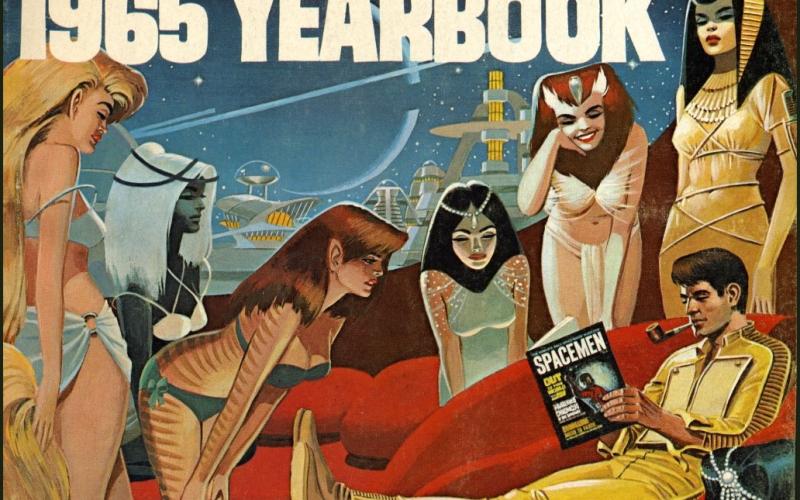
Spacemen Magazine was a relatively short-lived publication. It was published from July 1961 to July 1965 and was a spin off from the more successful “Famous Monsters of Filmland.” Both were edited by the late Forrest J. Ackerman and Published by James Warren. The cover art for the 1965 Yearbook was by well-known comic book artists Russ Jones and Wally Wood. This particular cover was unique because the magazine’s covers were usually a color photograph (still) from a film, or an artist’s rendering of some more sensationalistic aspect of science fiction.
This cover, with its urbane space bachelor gives a rather obvious nod to Hugh Hefner. The magazine featured mostly photographs from, and articles about the Hollywood “Space-Age” films and television programs which usually took a rather fanciful view of outer space and the future (e.g. robots, alien invaders, space travel, etc.).
Written by: Jay Clark